Al Morir Cuba
Realism’s ancient warning for the Cuban surge


In the afterglow of Nicolás Maduro’s dramatic capture and removal from Venezuela in January 2026, President Trump has repeatedly framed the operation as a clean, decisive triumph, the kind of quick victory that can now be replicated in Havana. “Cuba is next,” he has declared in Florida speeches, suggesting the same maximum-pressure formula (oil blockade, leadership concessions, or a friendly takeover) will deliver rapid results on an island just 90 miles from Key West.
Secretary of State Marco Rubio has echoed the confidence: serious reform is impossible “with these people in charge.” That kind of narrative was seductive as the Berlin wall fell – a simple story of American power bending a stubborn adversary to its will. But regular Americans have grown weary of extractive conquests that never seem to make their lives any better; it mostly takes their sons. Neocon foreign policy undeniably makes the ruling echelon along with the purveyors of war – Lockheed Martin, RTX, Northrup Grumman, General Dynamics and Boeing – wealthy and powerful in ways we can only imagine. “War is our business, and business is good.”
History’s great realists of international relations (IR) would greet this optimism with analytical sobriety, prioritizing the harsh lessons of regime change, such as the disaster in Iran, over the enthusiasm of the moment. From Thucydides’ account of ancient Athens to Henry Kissinger’s Cold War balance-of-power diplomacy and John Mearsheimer’s modern offensive realism, the record is peppered with cautionary tales about the myth of the quick foreign-policy win. Overreach born of hubris, the stubborn logic of nationalism, and the limits of overwhelming power all conspire to turn decisive interventions into quagmires. The Venezuela precedent – already showing signs of lingering economic entanglement and political ambiguity – and the looming Cuba campaign, offer a fresh test of whether these timeless lessons still apply.
Thucydides would see Cuba as a modern Melos and warn both sides of the same structural trap. Havana is counting on another world power to save the island, but perhaps waiting for the Spartans is just a noble excuse to avoid the humiliation of submission. Without the flickering hope of revolution, the brethren of Fidel and Che are archetypes of delusion in a godless universe, giving speeches to the wooden planks while building their own coffins.
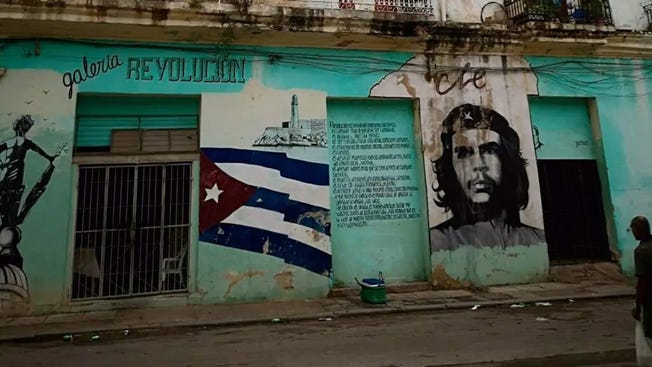
In the famous Melian Dialogue, the small, neutral island of Melos appeals to justice, fairness, and its distant Dorian kinship with Sparta for protection against Athenian demands. The Athenians dismiss the illusion in one brutal line: “The strong do what they can and the weak suffer what they must.” The Melians cling to hope that Sparta will sail to their rescue. They are annihilated. Sparta never comes, not in time, not with enough force, not when it would cost them dearly against a superior power close at hand.
Cuba today is playing the Melian role. For decades it has relied on distant patrons: Soviet subsidies, Venezuelan oil-for-doctors swaps, Chinese-linked signals-intelligence sites at Bejucal and elsewhere. Havana appears to calculate that Beijing’s investment in those surveillance assets will compel China to sail to the rescue when US pressure peaks. Yet Thucydides would caution the Cubans: distant friends are no friends at all when the strong are at your gates. Cuba is leaning on an ideological anti-imperialist camaraderie with China, but the PRC is nothing if not coldly pragmatic. Its support remains largely humanitarian, such as the recent $80M in emergency aid and 60k tons of rice, safer and kinder strategies than risking a high-stakes military shield that Cuba would need to deter a US kinetic initiative. Although it would terrify Miami’s rich and pampered to have a catapult-equipped Fujian aircraft carrier within striking distance of the Bal Harbor Beach, China is unlikely to risk the inevitable conflagration.
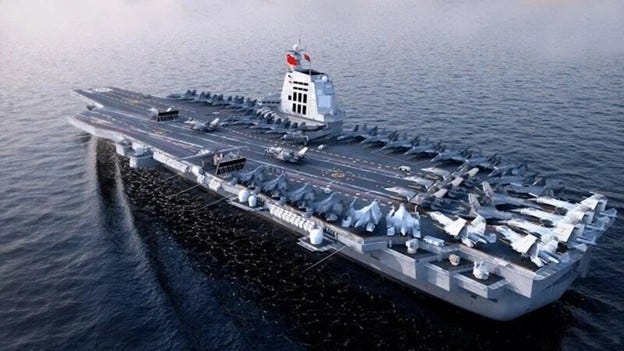
China’s reaction to the May 1st sanctions has been exactly what realism predicts: sharp diplomatic condemnation of America’s “illegal, unilateral actions,” while announcing rhetorical firm support for Cuban sovereignty, but the reality is this: zero movement of naval assets, no threats of escalation, and no indication that Beijing will risk direct confrontation eight-thousand miles from home. Havana may have hope for a shield from a great power but Beijing, like ancient Sparta, will ultimately prioritize its own strategic interests over the survival of a distant, vulnerable partner. China will almost certainly eat the sunk cost on its Cuba-based surveillance hardware rather than hand Washington a justification for further action. They may again send the Silk Road Ark hospital ship on a humanitarian tour of the region, taking the high road of optics while the US cuts power to infants in their incubators and blocks medicine for the chronically ill. In the modern version of the demise of Melos, China finds it “honorable” to condemn the US blockade, but it does not find it “just” to risk its own global standing to save a regime that has essentially lost the mandate of its own people. The strong do what they can; the weak suffer what they must.
At the same time, Thucydides would turn the same unflinching gaze on Washington. The Sicilian Expedition – Athens’ overconfident, distant campaign sold as a swift strike to cripple rivals and secure resources – ended in total disaster: fleet destroyed, army annihilated, empire fatally weakened. The diagnosis was not moral outrage but structural hubris: the belief that temporary advantage and past success guarantee a clean, low-cost outcome. Cuba is perilously close to Key West, yet the friction of stabilizing a society with deep economic rot, entrenched bureaucracy, and palpable nationalism is still immense. The quick victory rhetoric glosses over exactly the variables that undid Athens.
Henry Kissinger, the 20th-century practitioner of realism and part-time war criminal, absorbed that warning. For Kissinger, foreign policy was never about remaking the world in America’s image but about managing power relationships in a tragic, anarchic system. “America has no permanent friends or enemies, only interests.” Interventions driven by ideological fervor often ignore local realities and the balance of power. Regime change, in his view, was rarely quick and almost never clean; it risked creating power vacuums that adversaries would exploit.
John Mearsheimer, today’s most forceful voice of offensive realism, updates this tradition. He has described the Maduro capture not as liberal triumph but as “good old-fashioned imperialism,” a bid for regional dominance and resources. He argues that Trump’s approach reflects a realist instinct (reasserting hemispheric influence) yet risks the classic realist trap: underestimating the costs of entanglement and the resilience of local nationalism. “When things eventually settle in Venezuela,” Mearsheimer warned, “there’s going to be a very powerful temptation to put boots on the ground to fix the problem.” The same dynamic potentially repeats in Cuba, where Chinese surveillance sites add another layer of great-power complication despite the reluctance of Beijing to become a Caribbean belligerent. Quick wins are a mirage; great powers maximize relative power most effectively by avoiding unnecessary wars that drain blood and treasure.
What unites these thinkers is a shared skepticism of simplicity. Leaders crave the clean narrative – a single bold stroke that solves a stubborn problem. History rarely does. The strong may do what they can, but the weak rarely suffer quietly; they adapt, resist, or wait for the strong to overextend. In Iran, rather than taking up arms against the regime, the Persian survival machine is pumping out evocative Lego videos that are fostering support from wherever the internet reaches. Nationalism, geography, and the sheer friction of governing distant societies confound idealistic plans. The Israeli-American brigands thought the Iranian people would rise up against the Mullahs within 72 hours of launching Epstein Fury, yet when the Americans landed in country, in a failed attempt to rescue enriched uranium, the locals didn’t throw tulips, they fired shotguns.
Professor Mearsheimer often warns that the US, as the only regional hegemon, frequently falls into a trap where it mistakes the lack of immediate resistance for permanent legitimacy. Just as the Athenians believed their superior power gave them a natural right to dictate terms, Mearsheimer might argue that the Trump administration is following a crude form of realism, one that uses power to redraw maps rather than maintain systemic balance. Mearsheimer’s theory of offensive realism predicts China will inevitably try to push the US out of Asia even as the US acts aggressively to minimize Chinese encroachment in the west.
The PRC doesn’t need to launch missiles at yacht parties in Fort Lauderdale to crack the foundation of a crumbling empire. They’ll keep shipping fentanyl precursors to, and laundering money for, the cartels in Mexico, while working to link world oil to the Chinese Yuan (Renminbi), drowning the US in its own debt and failed economic vision. But hey, Cuba will have resorts owned by Zionist billionaires and the Cuban diaspora will finally rave with the Pyrrhic victory claimed by Marco Rubio, who the recently rendered Venezuelan president called an imbecile.
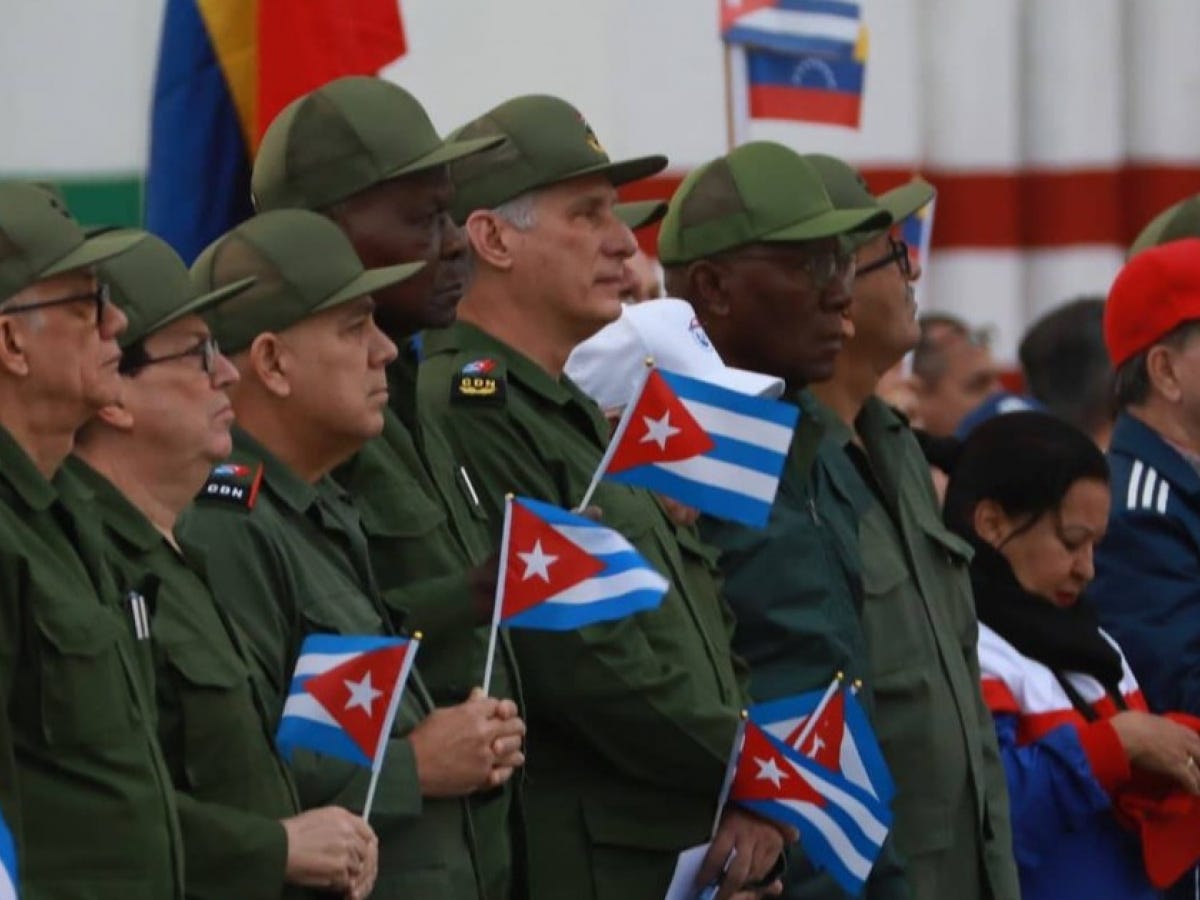
In the end, this Melian tragedy may not arrive with Athenian spears but with the quiet extinguishing of a long defiance. After decades of negotiation and intransigence, both sides have looked to what’s been achievable. In this standoff, achievable has meant that which could be exacted by Washington and relinquished by Havana, until redemption turned to vapor, leaving nothing but the men in green fatigues cremating a dead rebellion and casting its ashes into the surf at Varadero. Cigars, pistols and rum provided by Diaz-Canel for the repast, Patria y Vida playing on the wind, the final scene of la revolución as the sun sets in the west.